Latest update: January 15, 2026 - 2 min read
CRA Mileage Rate 2026
The CRA has officially released the mileage rate for 2026, effective January 1.
The 2026 mileage allowance is $0,73/km for the first 5,000 kilometres and $0,67/km thereafter, a 1-cent increase from 2025. In the Territories, the mileage rate is set 4 cents higher, at $0,77/km for the first 5,000 kilometres and $0,71 after that.
The rates apply to employees, who use their personal vehicle for business purposes. They represent the highest tax-exempt allowance employers can pay out. Read on for more details on how the rates apply to your employment type.
Mileage allowance 2026 vs 2025
| Mileage rates | Up to 5,000 km | After 5,000 km | Northwest Territories, Yukon, Nunavut |
|---|---|---|---|
| 2026 | 73 cents per km | 67 cents per km | Additional 4 cents per km |
| 2025 | 72 cents per km | 66 cents per km | Additional 4 cents per km |
How is the mileage rate determined?
The Canadian Revenue Agency (CRA) makes an annual adjustment to the mileage allowance rate to reflect the average costs of owning and operating a vehicle for business. In the past few years, we’ve seen the rate increase dramatically, with 7 cents in 2023, and 2 cents in 2025. This year, the CRA has decided on a 1-cent increase.
Using the 2026 CRA mileage rate
For employees
If you use your own vehicle or a leased car for work-related driving, your employer may reimburse you based on the CRA’s mileage rate for business kilometres. Keep in mind that employers are not required to follow the CRA rate exactly and may offer a per-kilometre allowance that is higher or lower.
If you’re reimbursed at a rate higher than the one stipulated by the CRA, it might be considered a taxable benefit you’ll have to pay income tax on.
For a more detailed explanation, you can refer to our mileage reimbursement guide for employees.
For self-employed individuals
Self-employed or business owners in Canada cannot apply the CRA mileage rate to deduct vehicle costs at tax time.
You can, however, claim actual expenses for business driving you’ve done in the previous year, provided you clearly separate business from personal use of the vehicle.
Learn more about claiming vehicle expenses as self-employed in our CRA mileage guide.
For employers
Employers are not required to reimburse employees for business-related kilometres using the 2026 CRA mileage rate. You can choose to provide vehicle allowance or reimbursement that’s higher or lower than the government-set rate.
Remember, the per-kilometre rate you decide on must be deemed reasonable by the CRA.
If deemed excessive, the allowance provided to the employee may be considered a taxable benefit and will be taxed as part of the employee’s income.
Our guide to vehicle allowance rules for employers contains more detailed guidance on the topic.
How to track your business kilometres effectively
Whether you’re claiming a tax deduction as a self-employed individual or a vehicle allowance from your employer, you’ll need proper evidence of the business kilometres you’ve driven.
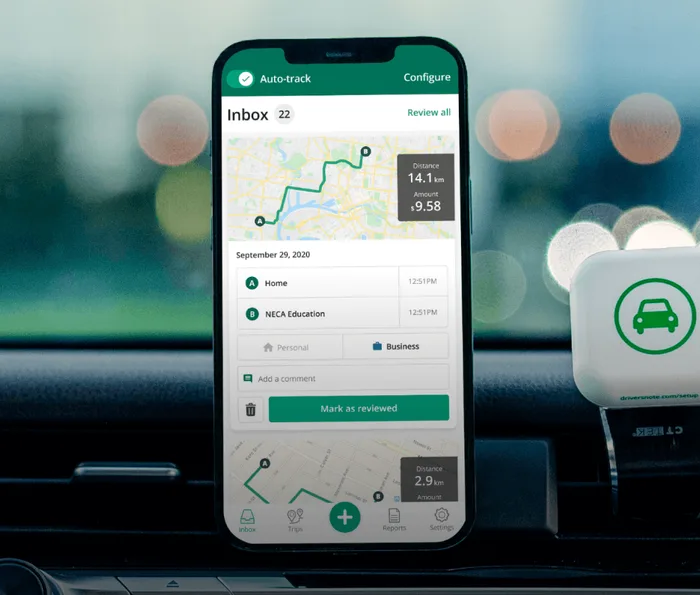
You may choose to log your trips with pen and paper or spreadsheets, but it can become quite tedious and time-consuming if you frequently drive for work. A mileage tracking app can simplify the process by automatically recording trips and generating compliant reports that meet CRA requirements - with one tap.
Tired of logging mileage by hand?
Effortless. IRS-compliant. Liberating.
 Auto-track trips
 Classify trips
 IRS compliant reports